Clear glass brings light into a room. It also leaves a lot of that room on display. A shower enclosure, a front-door sidelight that faces the street, or a glass-walled conference room can all feel exposed. Blinds and curtains block the view, but they also block the light you wanted in the first place.
Decorative window film sits between those two choices. It’s a thin film applied directly to existing glass, and it comes in frosted, patterned, and gradient styles. It can soften or block sightlines while still letting light through, and it can change the look of a space without replacing the glass.
In our last post, Heat Rejection: Which Window Films Perform Best and Why?, we looked at how solar films manage Las Vegas heat and glare. This time we’re focusing on the design side of window film. This guide covers the main decorative film styles, where each one tends to work best in homes and offices, and the questions to ask before you choose one.
What Is Decorative Window Film?
Decorative window film is an architectural film made to change how glass looks. Solar film is mainly about heat and glare. Decorative film is mainly about privacy, light diffusion, and design. The International Window Film Association notes that decorative films range from simple stock patterns to fully custom graphic designs.
Most decorative films are translucent rather than reflective. Instead of mirroring the outside world, they scatter light as it passes through the glass, which blurs what’s on the other side. That difference matters for privacy, which we’ll cover below.
Decorative films are commonly used on:
- Bathroom windows and shower glass
- Front doors, sidelights, and transom windows
- Glass office walls and conference rooms
- Lobbies, reception areas, and retail spaces
- Glass cabinet doors and interior partitions

Frosted Film: The Clean, Classic Look
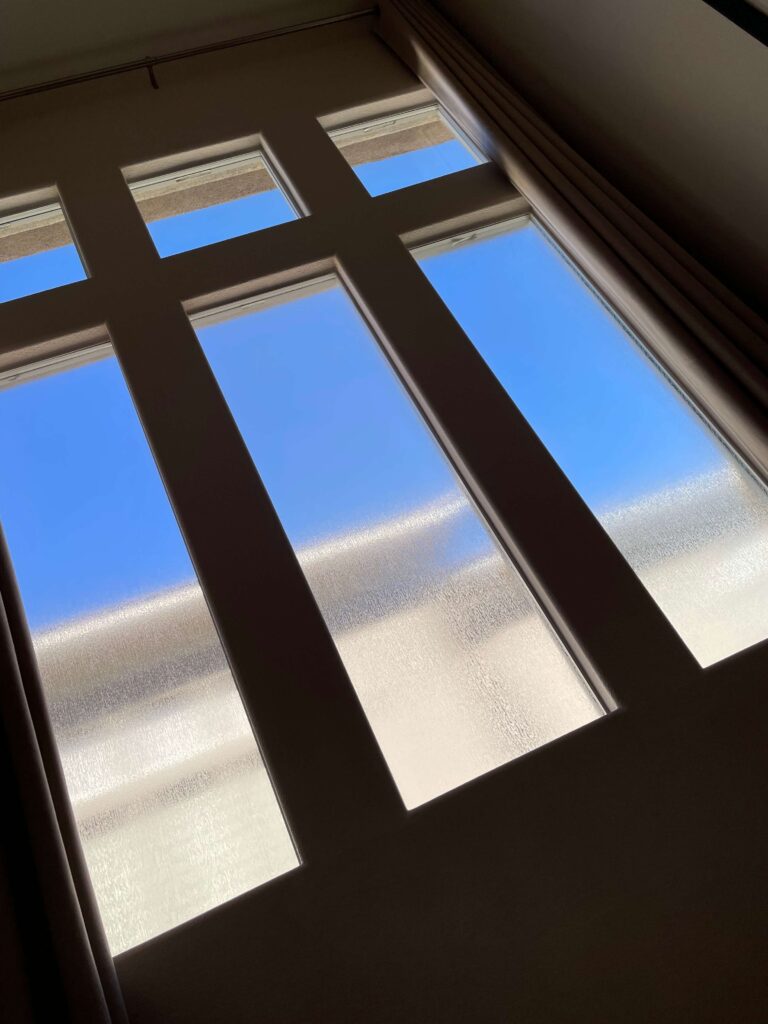
Frosted film gives clear glass the look of etched or sandblasted glass. It lets diffused light through while obscuring details on the other side, so you can tell someone is there without seeing them clearly.
Where it works well:
- Bathrooms: windows and shower enclosures where you want daylight without a clear view in
- Offices: conference rooms and private offices that need some separation without feeling closed off
- Entryways: sidelights and door glass that face the street or a neighbor
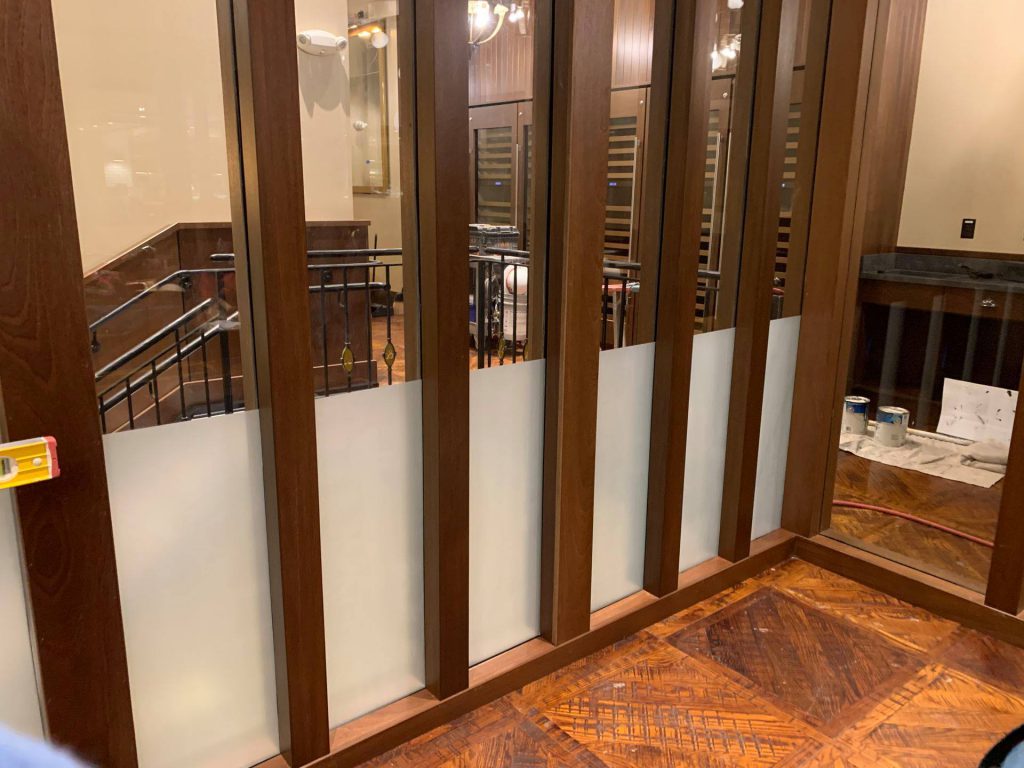
Frosted film doesn’t have to cover the whole pane. A horizontal band at eye level is a common option for glass office walls. It adds privacy for people who are seated and keeps the upper glass clear so light can still move through the space.
Patterned and Textured Film: Privacy With Personality
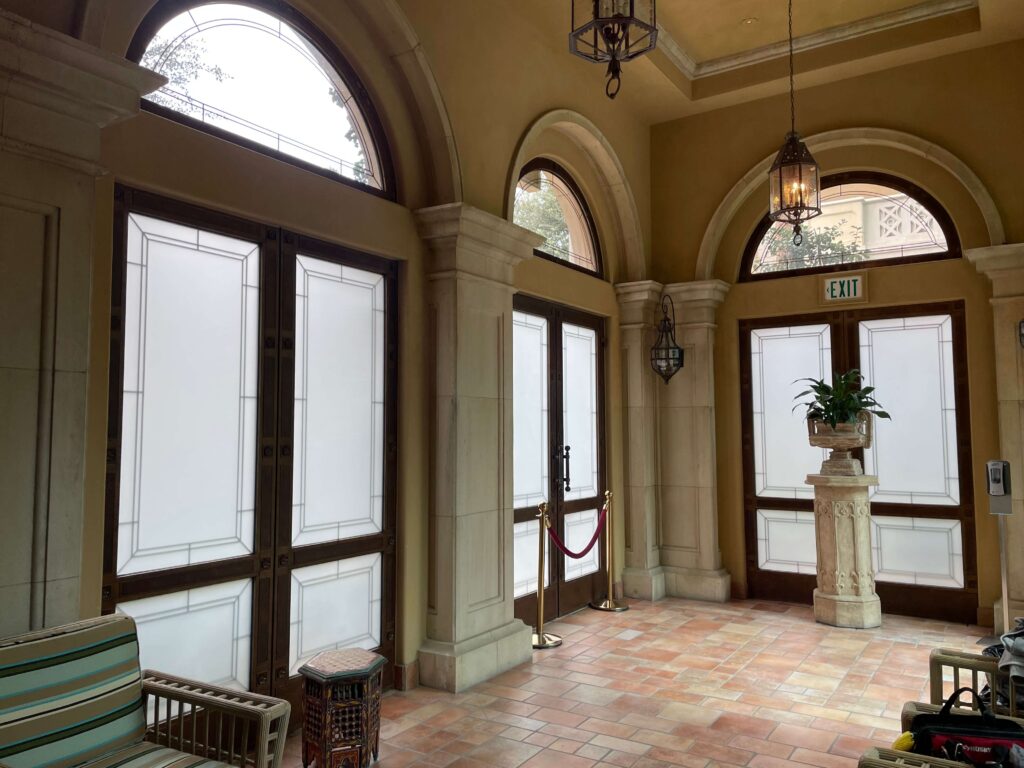
Patterned films add a design element: lines, geometric shapes, textures, or a stained glass look. Some patterns are mostly decorative. Denser patterns obscure more of the view.
Where it works well:
- Front doors and transoms where you want a custom, finished look
- Glass cabinet doors to soften the view of what’s inside
- Lobbies and reception areas where the glass is part of the interior design
- Glass partitions where a pattern helps people see the glass and avoid walking into it
Before you choose a pattern, think about how much privacy you need. A light, open pattern can look great and still leave much of the room visible. Viewing a sample on your actual glass, in your actual lighting, is the best way to judge.

Gradient Film: Privacy Where You Need It, Light Where You Want It
Gradient film fades gradually, often from frosted to clear. It’s a good fit when you only need privacy on part of the glass.
Where it works well:
- Bathroom windows: frosted on the lower portion, clear at the top to keep a view of the sky
- Street-facing windows: obscures views from the sidewalk while keeping a bright, open feel
- Office fronts and conference rooms: a softer, more modern look than a solid frosted band
Other Decorative and Specialty Film Options
Beyond frosted, patterned, and gradient styles, some specialty films serve specific needs:
- Static cling film: holds to glass without adhesive, which can make it easier to remove or reposition. It can be a good fit for some temporary uses. (Renters should check with their landlord before making changes to windows.)
- Light-diffusing film: spreads incoming light more evenly to soften hot spots
- Dry erase film: turns a glass wall or partition into a writing surface for meeting rooms
- Rear projection film: lets suitable glass be used as a display surface for projected images in commercial settings
How Much Privacy Will Decorative Film Actually Give You?
This is the most important question to ask, and the answer depends on the film and the setting.
In our post on whether reflective window film gives you privacy at night, we explained that reflective film depends on which side of the glass is brighter. Translucent decorative films work differently. Because they diffuse light instead of reflecting it, their privacy effect doesn’t depend in the same way on which side of the glass is brighter.
There are still limits to keep in mind:
- Silhouettes may still show. With bright lights on inside at night, people outside may see shapes or movement through frosted or gradient film.
- Coverage matters. A partial band or open pattern leaves some areas clear.
- Distance and angle matter. Up close, some films reveal more than they do from across a room or street.
If you need complete visual privacy, ask about films designed to block more light, or plan to pair decorative film with shades. A good installer will help you match the film to the level of privacy you actually need.
Decorative Film for Homes vs. Businesses
For Homeowners
At home, decorative film usually solves a specific problem: the bathroom window that faces the neighbor’s yard, a front door that shows straight down the hallway, or a glass cabinet you’d rather not keep perfectly styled. It updates the look without replacing the glass.
For Offices, Lobbies, and Retail Spaces
In commercial spaces, decorative film can help define areas, give meeting rooms privacy, make glass walls easier to see, and support the interior design. Because the film is applied to existing glass, it can be a practical option when a space is being refreshed.
Questions to Ask Before Choosing a Decorative Film
- What problem am I solving? Privacy, glare, safety visibility, style, or a combination?
- When do I need privacy? Daytime only, or also at night with lights on?
- How much light do I want to keep? Full coverage versus a band or gradient
- Is this permanent or temporary? This can affect whether an adhesive or static cling film makes more sense.
- Does the glass type matter? Your installer should check that the film is suitable for your specific glass.
- Does it need to work with solar film? If heat and glare are also concerns, ask how decorative and heat-rejecting films can be used in the same space.
Frequently Asked Questions
Does frosted window film let light through?
Yes. Frosted film is translucent, so it allows diffused light through while obscuring the view. The amount of light varies by product.
Can decorative window film be removed?
Many decorative films can be removed, though the process and results depend on the product and how long it has been installed. Static cling films are designed to be easier to remove than adhesive films. Ask your installer about removal before you choose.
Is decorative film only for commercial buildings?
No. Decorative film is used in both homes and businesses, including bathrooms, entryways, cabinets, offices, conference rooms, and lobbies.
Will decorative film give me complete privacy at night?
Not always. Translucent films obscure details, but silhouettes or movement may still be visible when interior lights are on. For full nighttime privacy, ask about higher-privacy films or pair the film with window coverings.
Find the Right Decorative Film for Your Las Vegas Space
The right decorative film depends on your glass, your lighting, how much privacy you need, and how you want the space to feel. Window Tint Films LV can help you compare frosted, patterned, gradient, and specialty options for your home or business.
Browse decorative projects in our gallery, learn more about our window film options, or contact us to talk through your project.
Call: (702) 483-4394