
Reflective window film is a popular choice for homeowners who want to reduce heat and glare while adding a greater sense of privacy to their windows. During the day, its reflective appearance can make it more difficult for someone outside to see into your home.
But one of the most important things to understand before choosing reflective window film is this:
The same privacy effect does not necessarily continue after dark.
So, does reflective window film give you privacy at night? Let’s look at how it actually works.
How Does Reflective Window Film Provide Privacy?
The privacy effect of reflective window film depends heavily on the difference in light levels on either side of the glass.
During the daytime, the exterior of your home is typically much brighter than the interior.
Under these conditions, reflective film can create a mirror-like appearance on the brighter exterior side of the glass. This makes it more difficult to see into the home while still allowing occupants to maintain some visibility looking outside.
This is why reflective window film is commonly associated with daytime privacy.
What Happens to Reflective Window Film at Night?
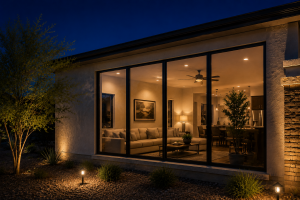
After sunset, the lighting conditions change.
If your lights are on inside your home while it is dark outside, the interior becomes the brighter side of the glass.
As a result, the daytime privacy effect of reflective window film is reduced, and someone outside may be able to see into the illuminated interior.
The exact appearance will depend on the film, glass, and lighting conditions, but homeowners should not assume that reflective window film provides complete nighttime privacy.
Is Reflective Window Film One-Way?
You may hear reflective products described as “one-way window film” or “one-way privacy film.”
However, the term can create unrealistic expectations.
The privacy effect isn’t permanently locked to one direction. It is influenced by which side of the glass has more light.
Think of it this way:
Brighter outside + darker inside = greater daytime privacy from outside.
Darker outside + brighter inside = reduced privacy from outside.
That’s why understanding your home’s lighting conditions is just as important as choosing the film itself.
How Can You Maintain Privacy at Night?
If nighttime privacy is important to you, reflective window film may need to be paired with another solution.
Blinds, shades, curtains, or other window treatments can provide additional privacy after dark when interior lights are on.
During the day, homeowners can enjoy the benefits of reflective window film. At night, traditional window coverings can provide the additional privacy needed when lighting conditions reverse.
This combination can be especially useful for bedrooms, bathrooms, street-facing living areas, and other spaces where privacy is a priority throughout the day and night.
Reflective vs. Non-Reflective Film for Privacy
Privacy shouldn’t be the only consideration when deciding between reflective and non-reflective window film.
Reflective films may be a good fit for homeowners who prioritize:
- Increased daytime privacy
- Solar control
- Glare reduction
- A more reflective exterior appearance
- Cost-effective window film options
Non-reflective films may appeal to homeowners who prefer:
- A more natural-looking window
- Less exterior reflectivity
- Premium film technology
- Solar performance without a pronounced mirrored appearance
Neither film should automatically be considered a substitute for blinds or curtains when complete nighttime privacy is required.
The right option depends on your home’s windows, lighting, appearance, comfort goals, and how much privacy you expect at different times of day.
What Else Should You Consider When Choosing Privacy Window Film?
Before selecting a residential privacy window film, consider more than what the glass looks like in a sample.
Ask yourself:
- When do I need the most privacy?
- How bright is the room during the evening?
- Are my windows visible from the street or neighboring properties?
- Do I want to maintain my view during the day?
- Am I comfortable using blinds or curtains at night?
- Do I prefer reflective or natural-looking glass?
- Does my HOA have guidelines regarding exterior window appearance?
Answering these questions can help your window film professional recommend an option that better matches your expectations.
Privacy Is Only One Benefit of Reflective Window Film
While privacy is often what gets homeowners interested in reflective film, it isn’t the only reason to consider it.
Quality solar-control window film can also help reduce uncomfortable heat and glare while protecting interiors from UV exposure.
For Las Vegas homeowners, these benefits can be particularly valuable in rooms exposed to intense sunlight throughout the day.
Rather than choosing reflective film solely for privacy, consider how its combination of solar control, glare reduction, UV protection, appearance, and daytime privacy fits your home.
And continue earning the trust of every customer, one project at a time.
Find the Right Privacy Window Film for Your Las Vegas Home
The key to choosing window film is having realistic expectations about what each product is designed to do.
Reflective window film can provide valuable daytime privacy, but lighting conditions matter—and the privacy effect changes after dark when the inside of your home becomes brighter than the outside.
At Window Tint Films & More by Borgwald, we can help you compare reflective and non-reflective window film based on your home’s glass, lighting, privacy needs, appearance, and solar-control goals.
Want more privacy without choosing the wrong film?
Contact Window Tint Films & More by Borgwald to discuss the right window film solution for your Las Vegas home.
Call: (702) 483-4394